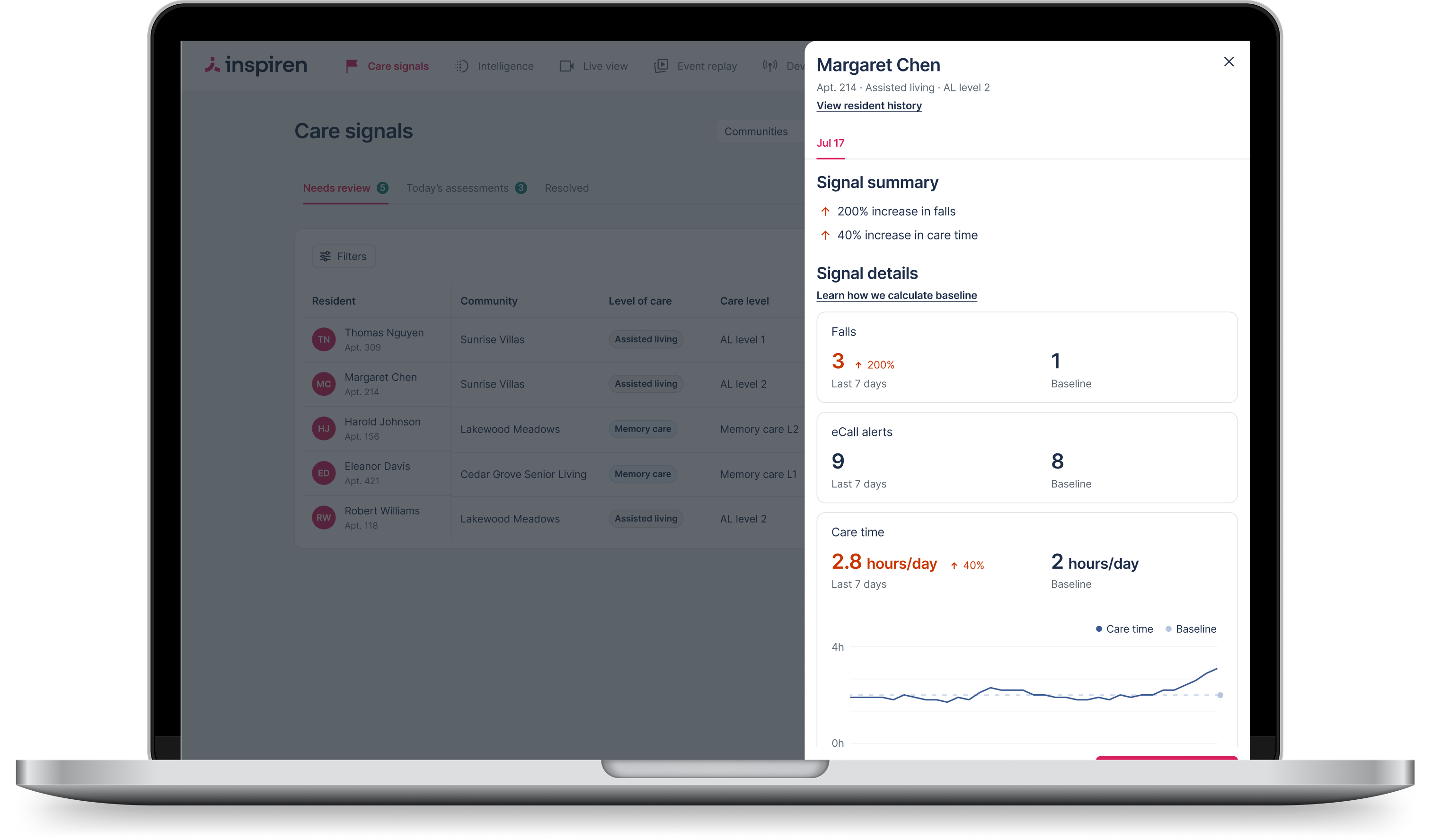
Activity trends and clinical context come together in one place, so care teams can spot changes in a resident’s needs sooner.
Every resident has a story, and sometimes the first signs that something is changing are easy to miss. A resident who has always handled her mornings independently now needs a little more help each day. Another has begun pressing his Inspiren Help Button more often, and a third, who has always been quick to ask for help, has gone quiet.
Alone, none of these changes signal a problem, but each could be an early sign that a resident’s needs are changing.
Care teams know their residents better than any report can. But the details that show a resident’s needs are changing are spread across shifts, systems, and conversations, and connecting them takes time that busy teams don’t always have. Early changes can go unnoticed.
The opportunity isn’t to replace clinical intuition, but to give care teams more to work with.
That’s the thinking behind Care Signals, a new dashboard in Inspiren HQ that highlights meaningful changes in resident activity, so care teams know who may need a closer look. It flags meaningful increases or decreases in a resident’s activity compared with their established baseline, including things like changes in falls, care time, and eCall utilization.
Meaningful changes, brought into focus for care teams
Care Signals brings changing trends in resident activity into view. Instead of piecing together isolated events, teams get a clearer view of who may need a closer look.
What this looks like: a resident starts pressing his Help Button more often at night. One night might not raise concern, and the change may not be obvious to someone who sees him only occasionally. Looking at activity over time, the clinical team can recognize a trend worth exploring.
Care Signals does not determine what a change means or prescribe what happens next. It surfaces patterns worth a look so care teams can focus where attention may be needed most.
The care team decides what happens next
Recognizing a change is only the beginning. What matters is how the team investigates and responds. With Care Signals, care teams can review changes and decide on next steps, bringing their clinical judgement and experience with the reåsident to every decision.
A closer look might lead to a conversation with the resident, more observation, or a formal assessment. It might also confirm that everything is fine, which is a useful answer too.
Inspiren’s Clinical Success team, made up of RNs and PTs, is also there to partner with clinical leadership in sharing best practices and putting these insights into practice.
Care Signals supports the way care teams already work. It adds context to their review without adding another process to manage, and every assessment and care decision stays with the people who know the resident best.
Built to strengthen the human side of senior living
Senior living teams balance competing demands every day, and small changes are hard to track over time. At Inspiren, we believe technology should strengthen the human side of senior living. What matters is what that information makes possible for the people providing care.
Better care doesn’t come from collecting more data. It comes from turning that data into understanding, so care teams can build on the work they already do. Behind every data point is a person with routines, preferences, relationships, and a story of their own.
Get in touch with our team to see Care Signals in action.
