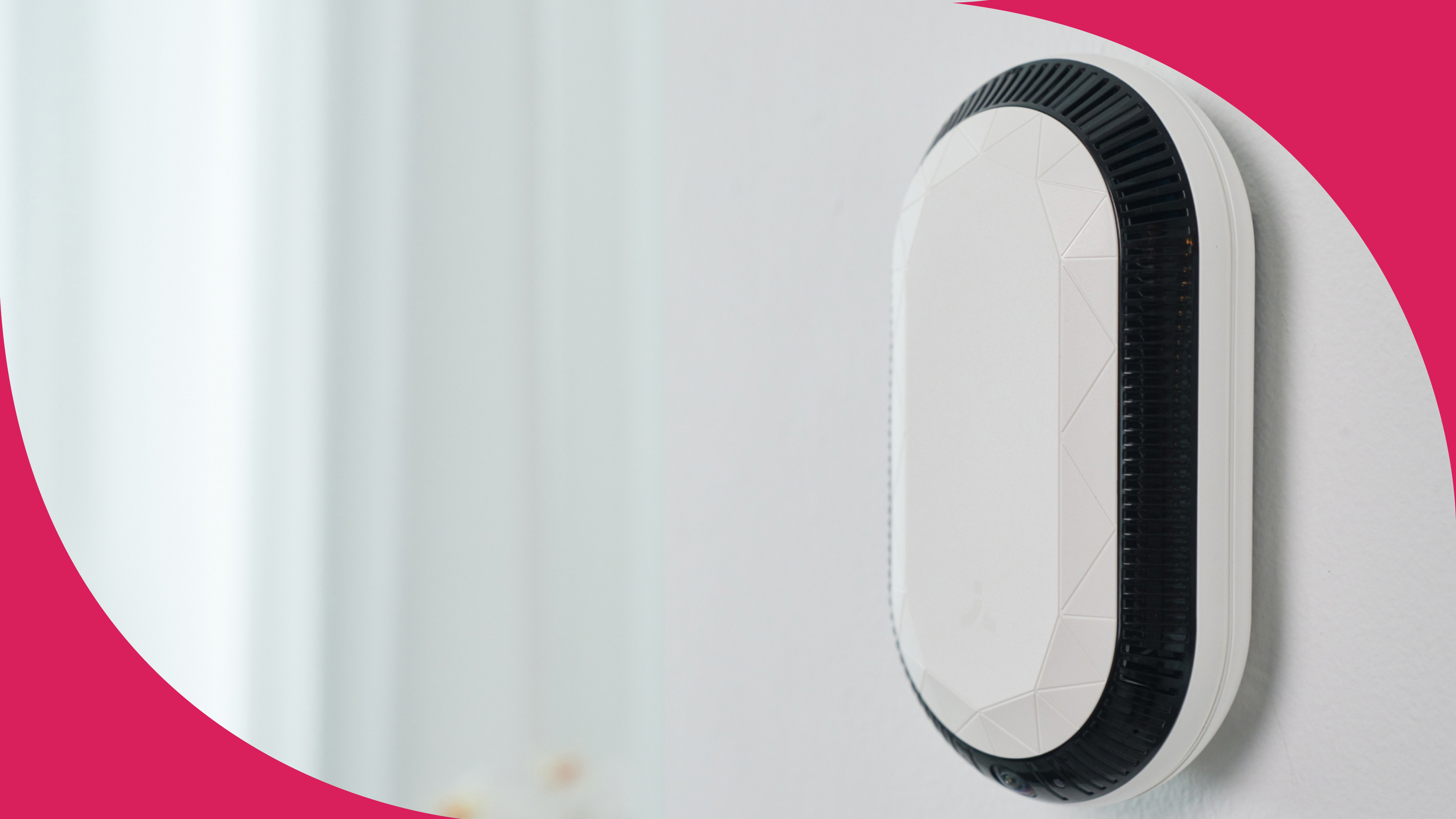
Choosing the right senior living software is one of the most important operational decisions a COO, VP of Care, or IT leader will make. Most communities run 6–10 disconnected tools at a time — each solving one problem while creating new ones. This guide breaks down the difference between fragmented point solutions and unified platforms, what that distinction costs operationally, and how to evaluate your options with confidence.
TL;DR
- Most senior living operators manage 6–10 disconnected software tools per community.
- Fragmented point solutions create data silos that reduce care quality and revenue.
- Unified platforms connect care, safety, and operations in one system.
- A 7-point framework helps you evaluate any senior living software vendor objectively.
- AI-powered platforms deliver clinical and financial outcomes that point solutions cannot match.
What Is Senior Living Software?
Senior living software is any technology platform or application that helps operators manage the care, safety, operations, and business functions of a senior living community.
The term covers a wide range — from single-function apps like medication management tools or resident check-in systems, to full enterprise platforms that unify billing, care planning, staffing, and compliance in one place. Assisted living software might focus on medication management or care planning. Senior living technology may prioritize resident engagement, billing, or staff scheduling — while memory care communities often require more specialized tools like wander management technology and fall detection technology. CCRCs often require all of the above, integrated into one system.
That wide range of tools is part of what makes the buying decision complex. The central question isn't whether your community needs modern technology built for senior living — it's whether a collection of point solutions or a unified platform will serve you better in the long run.
Types of Senior Living Software
Senior living software spans eight core categories. Each serves a different operational or clinical function.
- Electronic Health Records (EHR) and eMAR
- Assisted living EHR and eMAR software centralizes resident health records and medication administration. It reduces documentation errors and supports regulatory compliance.
- Emergency Call and Nurse Call Systems
- Emergency call systems let residents request help quickly and route alerts to the right staff. Fast response times directly impact resident safety and family confidence.
- Resident Safety and Monitoring
- Resident safety software uses sensors and ambient monitoring to detect falls, unusual activity, and health changes. It gives care teams real-time alerts without increasing direct observation hours.
- Care Planning and Acuity Management
- Care planning software helps teams build, update, and track individualized service plans. Accurate acuity management ensures staffing levels and billing reflect each resident's actual needs.
- Staff Scheduling and Workforce Management
- Senior living staffing software matches shift coverage to resident acuity and census. It reduces overtime costs and helps communities stay compliant with staffing ratios.
- CRM and Sales Marketing
- Senior living CRM software tracks leads, automates follow-up, and measures conversion across the sales funnel. It helps communities improve occupancy rates and revenue per unit.
- Resident and Family Engagement
- Senior living resident engagement software connects residents to activities, communications, and community life. It supports wellbeing and gives families visibility into daily life.
- Billing and Financial Management
- Senior living billing software automates invoicing, tracks payments, and manages payer mixes. Accurate billing protects net operating income and reduces administrative burden.
Platform vs Point Solution in Senior Living
The Case for Point Solutions
You can deploy a best-in-class assisted living EHR, a standalone CRM, or a dedicated scheduling software without committing to a full platform replacement. Vendors specializing in one category often go deeper on features, compliance updates, and integrations within that function. For smaller communities or single-site operators, this approach can be cost-effective and low-risk.
The tradeoff is fragmentation. Staff switch between systems. Reporting requires manual reconciliation. And every new vendor adds another contract, another support relationship, and another integration to maintain.
The Case for a Unified Platform
A unified senior living software platform connects care, safety, operations, and business functions in one system. Data flows between modules without manual export. Care teams, community leaders, and executives see the same real-time data. Alerts trigger across functions automatically.
The operational impact compounds over time. When care planning, resident safety, emergency call, and billing share a single data layer, communities can act on information faster, reduce errors, and generate insights that siloed tools simply cannot produce.
That said, no single platform today covers every function end-to-end — nor can it. Certain tools, like electronic health records (EHRs), exist in a category of their own due to regulations that require them to operate independently. The best unified platforms are built with this reality in mind, offering seamless integrations with best-in-class point solutions so that data still flows where it needs to, even when the software can't all live under one roof.
Point Solutions
Single-function tools built for depth. Vendors focused on one category often deliver more specialized features and faster compliance updates — but each tool operates in isolation, creating data silos and integration overhead that compounds as your stack grows.
Unified Platforms
A single environment connecting multiple operational and clinical functions. The strength is interoperability — real-time insights, automated workflows, and cross-functional reporting that point solutions can't replicate. The tradeoff is commitment: more upfront planning, and no single vendor will be the deepest specialist in every category.
The Hidden Cost of Multiple Software Vendors
Every software vendor you add to your stack carries a cost beyond the license fee. That cumulative burden — in time, errors, and missed insights — is what we call the integration tax.
Executive teams at multi-site operations can spend significant time managing vendor relationships instead of driving outcomes — and when care staff turn over, that burden compounds. Onboarding new team members across a fragmented stack of tools means more training, more credentialing across systems, and more room for gaps in care continuity.
Care staff switching between multiple logins and interfaces make more errors. Cognitive load increases when workflows are fragmented across systems. That burden falls hardest on frontline teams already stretched thin — and it doesn't stop at onboarding. Every new hire, every role change, and every system update means retraining staff across multiple platforms, pulling time and attention away from residents.
When systems don't share data natively, someone reconciles it manually. That work is slow, error-prone, and pulls clinical and administrative staff away from higher-value tasks.
When a care event spans multiple systems, accountability fragments across vendors. Each points to the other. Operators are left without a clear record or a single point of resolution.
For portfolio operators, every integration problem scales with each community added. A manageable complexity at one site becomes an operational drag across ten. Senior living technology that isn't standardized across sites compounds the total cost of ownership at every level.
The Case for Point Solutions
Point solutions are not inherently the wrong choice. For many operators, they are the right tool at the right stage of growth.
- Single-site operators with simple workflows
- A community with stable census and straightforward care needs may not require a full platform.
- Best-in-breed niche tools
- Some functions — dining POS, memory care assessments, specialized therapy documentation — have no meaningful platform equivalent yet.
- Early-stage communities still defining needs
- Operators still learning their workflows benefit from lower-commitment tools before locking into a platform.
- Budget-phased adoption with a migration plan
- Deploying point solutions intentionally, with a clear path toward integration, is a viable strategy.
- State-mandated standalone reporting tools
- Some compliance requirements dictate specific software. These are non-negotiable regardless of your platform strategy.
The question isn't whether point solutions are bad. It's whether your collection of them is costing more than you realize.
The Case for a Unified Platform
There is a point where managing disconnected tools stops being a strategy and starts being a liability. These are the signals that consolidation is overdue.
- Your staff log into four or more systems to complete a single care workflow.
- Incident reports require manual data pulls from multiple vendors.
- Your care planning software doesn't reflect real-time acuity changes.
- Multi-site reporting takes days instead of hours.
- You've lost a resident due to a delayed alert or documentation gap.
When those signals appear, the case for a unified platform becomes measurable. Real outcomes from Inspiren-enabled communities show what's possible when care, safety, and operations share a single data layer.
Real insights from Inspiren-enabled communities.
$840 increase in annual revenue per unit through accurate care planning.
68% reduction in falls with unified resident safety monitoring.
83% fewer falls resulting in 911 calls through proactive resident safety protocols.
75% faster response time to alerts with integrated emergency call.
31% of care plans corrected to accurate acuity levels through care planning software.
22% occupancy improvement across monitored communities.
100% of care documented with ambient monitoring in place.
How to Evaluate Senior Living Software
Use this framework before committing to any senior living technology solution. It applies to point solutions and platforms alike.
- Assess coverage scope
- Does this software address one function or many? If it's a point solution, how will it integrate with the rest of your stack?
- Verify native data integration
- Does data flow automatically between this tool and your other systems? Or does integration require middleware, manual exports, or custom API work?
- Test multi-site scalability
- Can this software be configured once and deployed consistently across every community in your portfolio? Or does each site require its own implementation?
- Evaluate clinical and operational depth
- Does the platform go deep enough on care planning, acuity management, and resident safety to replace your current point solutions? Or does it cover everything at a surface level?
- Review implementation and success support
- Does the vendor provide a dedicated clinical success team? What does onboarding look like, and who owns the outcome after go-live?
- Calculate total cost of ownership
- Have you accounted for integration costs, staff training, vendor management time, and renewal overhead across every tool in your stack?
- Require outcome evidence
- Can the vendor show you real data from communities like yours? Occupancy rates, fall prevention results, and revenue per unit improvements should be on the table.
"Before signing any contract, ask the vendor: 'Show me the data from a community like mine.'"
How AI Is Changing Senior Living Software
AI is not a feature you add to a software stack. It is the reason unified platforms are becoming essential.
Every AI capability in senior living — predictive analytics, acuity flagging, staffing optimization — runs on data. The more connected that data is, the more accurate and actionable the output. Siloed point solutions feed AI only a fraction of what it needs.
The shift from reactive to proactive care depends on this. A fall detection alert tells you what already happened. A system that analyzes movement patterns, care history, and environmental data can anticipate risk before an incident occurs. That capability requires ambient monitoring, clinical records, and operational data working together in real time.
The same logic applies to staffing and acuity management. Predictive models that optimize shift coverage or flag residents approaching a higher care level need access to scheduling data, care plans, and safety signals simultaneously. No single point solution holds all three.
The next generation of senior living technology combines hardware, software, and clinical expertise in one ecosystem. Sensors feed data into clinical workflows. Workflows inform staffing decisions. Staffing data shapes financial planning. Each layer depends on the others to function at full potential.
Communities that adopt connected platforms today are building the data foundation that AI requires tomorrow. Those still managing fragmented stacks will find that foundation increasingly difficult to retrofit.
How Multi-Site Operators Scale Senior Living Software
Every new community a point solution operator adds requires another round of vendor negotiations, integrations, and staff training. A unified senior living management software platform eliminates that cycle.
Configure once, deploy everywhere
A platform built for portfolio operators standardizes workflows, documentation, and reporting across every site from day one. Regional leaders stop rebuilding the same stack and start scaling a proven one.
Portfolio-level analytics and benchmarking
Connected communities generate comparable data. Executive teams can benchmark occupancy rates, care acuity, incident frequency, and net operating income across their entire portfolio in real time.
Centralized dashboards for regional and executive leaders
Senior living technology solutions that surface portfolio-wide data in a single view give leadership the visibility to act fast. Outliers surface immediately. Decisions happen with complete information.
Clinical success teams that support adoption at scale
Deployment support matters as much as software quality. Platforms that embed clinical expertise into onboarding drive faster adoption and better outcomes across every community in the portfolio. Inspiren HQ is built specifically for this kind of multi-site deployment.
Explore Inspiren's AI-Powered Ecosystem
The data is clear: unified platforms outperform fragmented stacks on every operational and clinical measure that matters.
Inspiren connects care planning, resident safety, emergency call, and AI-powered monitoring in one integrated ecosystem built for senior living.
See why operators choose Inspiren →
-----------------------------------------------------------------------------------------------------------
